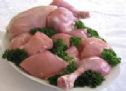
Sometimes it seems that the dangerous bacterium, Listeria monocytogenes is everywhere in our food supply. One product recall quickly follows another, at least in the United States. The most recent recall was issued yesterday by LJD Holdings, Inc.( doing business as B and D Foods). They recalled some 33,500 pounds of fully cooked meat and poultry products because of possible contamination by Listeria monocytogenes (click on the recall link on this page to get details of products recalled).
So what can you safely eat? This question is most important for pregnant women, older people, anyone with a compromised immune system, and anyone who has kidney disease, certain cancers, diabetes or is an alcoholic. For such people, a single lunch, dinner or snack can prove fatal. No, I am not exaggerating. While it is estimated that some 20-30 percent of Listeria infections result in death, the rate is much greater for people in the high risk group - estimates placing it anywhere between 40-70 percent.
I have written a lot about this issue in previous blog postings. But here are some of the basics.
People in the high risk groups may want to avoid "ready-to-eat" foods unless they are cooked thoroughly first. Such foods include:
Luncheon meats, bologna, pastrami, salami, cold-smoked salmon, refrigerated pate, meat spreads and other similar deli products.
Store-sold salads such as chicken salad, tuna salad, ham salad, seafood salad.
Ready-made sandwiches or similar foods.
Raw (unpasteurized) milk or foods made with unpasteurized milk.
Soft cheeses such as quesco blanco, quesco fresco, Feta, Brie, Camembert cheeses, blue-veined cheeses and similar unless the label states that they are made with pasteurized milk.
However - and I wish I didn't have to say this - L. monocytogenes sometimes also turns up in other foods (for instance in butter, and even whole produce), so even if you avoid such foods, it will not be a 100 percent guarantee of safety.
To your good health,
TSF
Showing posts with label deli meats. Show all posts
Sunday, January 20, 2013
Saturday, June 18, 2011
ARE HOT DOGS SAFE TO EAT?
Humphrey Bogart said, " A hot dog at the ballpark is better than steak at the Ritz." But Consumer Reports calls them "tidy little bundles, of sodium, additives and fat." And that's not all. Add microbes to that list. They're not present all the time, but they do crop up often enough to create risks for people who are particularly vulnerable - children, older adults, the frail or seriously ill, and pregnant women.
We think of them as "cooked meat." But actually, they can carry a variety of bacteria, especially the dangerous Listeria monocytogenes. The U.S. Centers for Disease Control (CDC) calls Listeria monocytogenes "a major public health risk." An estimated 1,600 Americans become seriously ill with listeriosis every year and 260 die from it (remember - such statistics are always an underestimation). The U.K. Food Standards Agency has also seen an increase over the past few years in England, Wales and Scotland, and to a lesser extent, in Northern Ireland. There has been a particularly notable rise among adults over 60 years of age. Listeriosis is a global problem.
Studies have shown that the ready-to-eat foods - such as hot dogs and other deli meats - pose the biggest risk. As The Safe Food Handbook advises, you need to heat them to 165 degrees F. Essentially, that means "steaming hot." Be especially careful when using a barbecue as it is easy to undercook meat. And make sure that juice from the package doesn't get onto any other food that you'll eat raw. If you take those precautions you don't have to worry about the bacterial risk - just those other ones like the additives and fat!
To your good health,
TSF
We think of them as "cooked meat." But actually, they can carry a variety of bacteria, especially the dangerous Listeria monocytogenes. The U.S. Centers for Disease Control (CDC) calls Listeria monocytogenes "a major public health risk." An estimated 1,600 Americans become seriously ill with listeriosis every year and 260 die from it (remember - such statistics are always an underestimation). The U.K. Food Standards Agency has also seen an increase over the past few years in England, Wales and Scotland, and to a lesser extent, in Northern Ireland. There has been a particularly notable rise among adults over 60 years of age. Listeriosis is a global problem.
Studies have shown that the ready-to-eat foods - such as hot dogs and other deli meats - pose the biggest risk. As The Safe Food Handbook advises, you need to heat them to 165 degrees F. Essentially, that means "steaming hot." Be especially careful when using a barbecue as it is easy to undercook meat. And make sure that juice from the package doesn't get onto any other food that you'll eat raw. If you take those precautions you don't have to worry about the bacterial risk - just those other ones like the additives and fat!
To your good health,
TSF
Saturday, May 14, 2011
ANOTHER RECALL OF DELI MEATS BECAUSE OF LISTERIA BACTERIA
The post on this blog with the most views, although it is only three months old, is "Foods Pregnant Women Should not Eat." There have been very few days when it has not headed the "most viewed" list, consistently beating out the other 140 or so posts. Some 600 people have read it. One of the items on the "beware list" in that post is the following:
• Deli meats, including hot dogs and salami, unless you re-heat them to a temperature of 165 degrees.
The reason is that there are frequent incidents of Listeria monocytogenes contamination in deli meats. This bacterium is a great survivor, and can even multiply in the refrigerator. Although with some people it may cause nothing more than a very mild illness, in about a fifth of cases this bacterium can be fatal. According to the CDC, about one third of Listeriosis cases occur during pregnancy. Although the disease rarely kills the pregnant woman herself, it can result in miscarriage, premature delivery, stillbirth and infection of the newborn. The bacterium is also very dangerous for people with AIDS, and others with a weakened immune system.
Fast forward to the present and the U.S. food supply. The U.S. Department of Agriculture's Food Safety and Inspection Service (FSIS) has just announced that Rose & Shore Meat Co., of Vernon, Calif., has recalled a number of its deli meat products because they may be contaminated with Listeria monocytogenes. The recalled products include:
• "OLYMPIC GOLD BEEF PASTRAMI" with the lot number "20911" and a "04-05-11" pack date.
• "ROSE AND SHORE N.Y. STYLE PASTRAMI" with the lot number "20911" and a "04-05-11" pack date.
• "COOKED ANGUS ROAST BEEF" with lot number "20941" and a use by date of "05-17-11."
• "TOGO'S PASTRAMI" with the lot number "20911", a "04-05-11" pack date and a use by date of "05-23-11."
These products were all shipped in large boxes (with smaller packages inside) to distribution centers in California for further distribution to food service establishments in Arizona, California, Nevada, Oregon and Washington. The FDA reported that there have been no retail sales. Those who would have been exposed to these deli meats would be people eating in restaurants, delis, hospitals, nursing homes, schools and similar places that use such products. Apparently one of the food service clients asked the company to test the meat in response to a consumer complaint (obviously someone getting ill, since you can't smell or see the difference in the meat). And - there we are - the testing turned up Listeria monocytogenes.
To your good health,
TSF
Sunday, April 17, 2011
WILL COOKING MEAT PREVENT STAPH FOOD POISONING?
The American Meat Institute (AMI) obviously didn't like that study I mentioned in yesterday's post - the one that found that about half of America's meat was carrying Staphylococcus aureus bacteria, and about half of those bacteria in U.S. meat and poultry were resistant to several groups of antibiotics. Bad news all round for the industry, and not the kind that gets you more meat eaters, or increases profits of meat producers.
Naturally, the AMI immediately tried to both discredit the study and to reassure consumers. They said that the sample size used in the research study was too small. I agree, it was small, but even if the numbers of bacteria are a bit lower, they are still pretty unpleasant. To comfort its meat-eating public, the AMI said not to worry, because while the Staph bacteria that the study found were antibiotic-resistant, they were not heat-resistant, and could be killed by cooking your lunch or dinner to an appropriate temperature. Several other news releases on the topic have more or less said the same thing: "cook your meat well and you have nothing to worry about."
Not true. Let me explain why. Staphylococcus aureus can enter open wounds (even cuts so tiny that they are invisible) of people preparing the meat and cause dangerous infections - especially if the staph is one of the MRSA kind(the most antibiotic resistant, which two of my friends are struggling with).
As for staphylococcus food poisoning, some news for you people at AFI - and you should have known this: It is not the bacteria themselves that cause the illness. It is the enterotoxins they produce (including Staphylococcal enterotoxin A,B,C,D, and E). These toxins are fairly heat and freezing resistant. They can survive in your frozen burgers for as long as a year (if you keep them that long, which I wouldn't advise). As for being inactivated during cooking - the bacteria can be killed, but these toxins can survive and still make you ill after several minutes of cooking your meat at high temperatures.
So why isn't Staphylococcus aureus a more common cause of food poisoning?
Read the next post.
TSF
Naturally, the AMI immediately tried to both discredit the study and to reassure consumers. They said that the sample size used in the research study was too small. I agree, it was small, but even if the numbers of bacteria are a bit lower, they are still pretty unpleasant. To comfort its meat-eating public, the AMI said not to worry, because while the Staph bacteria that the study found were antibiotic-resistant, they were not heat-resistant, and could be killed by cooking your lunch or dinner to an appropriate temperature. Several other news releases on the topic have more or less said the same thing: "cook your meat well and you have nothing to worry about."
Not true. Let me explain why. Staphylococcus aureus can enter open wounds (even cuts so tiny that they are invisible) of people preparing the meat and cause dangerous infections - especially if the staph is one of the MRSA kind(the most antibiotic resistant, which two of my friends are struggling with).
As for staphylococcus food poisoning, some news for you people at AFI - and you should have known this: It is not the bacteria themselves that cause the illness. It is the enterotoxins they produce (including Staphylococcal enterotoxin A,B,C,D, and E). These toxins are fairly heat and freezing resistant. They can survive in your frozen burgers for as long as a year (if you keep them that long, which I wouldn't advise). As for being inactivated during cooking - the bacteria can be killed, but these toxins can survive and still make you ill after several minutes of cooking your meat at high temperatures.
So why isn't Staphylococcus aureus a more common cause of food poisoning?
Read the next post.
TSF
Thursday, February 10, 2011
CONTAMINATED READY-TO-EAT FOODS
One of the consistent arguments of The Safe Food Handbook is that ready-to-eat (RTE) foods are likely to be more risky. This applies to meat products as well as non-meat RTE foods. And it's the same everywhere - not just in the United States and Canada.
Did you notice in the previous blog ("The Food Recall Myth") that almost all of the items on the 2010 6-month list of USDA recalls fell into that category (fried pork loaf, salads, appetizers, sandwiches, potstickers and so on - take a look). In fact, it was a bad year for RTE products, particularly those containing meat or based on meat.
Here's what I found for 2010 as a whole (12 months - but I included only recalls linked to possible contaminants of one kind or another - not those for mislabeling, an undeclared allergen or ingredient): 73% of the recalls by the USDA were for ready-to-eat products. This was up considerably from 2009, where the majority of such food recalls (22 compared to 19) were for uncooked fresh or frozen meat - usually ground beef products.
Why? I bet it's at least partly because we are cooking less and less and eating more and more of the "grab and go" type of foods. Alright, I perfectly sympathize with the woman who wrote in and said that after a day's work, when she was too tired to cook, it was at least a step up from fast food. Agreed. But it's a step down from a 10-15 minute, "frig to plate" fresh-cooked meal.
OK - I'm super fast, but yes, you can make a great though simple dinner for two based on fresh products in that time (complex ones naturally take longer). Of course, another way to do it is what one of my busy but health-conscious friends (who up to recently lived alone) does: she goes to the farmer's market on the weekend and then fresh cooks and freezes dinners for the weekdays ahead. OK, maybe a bit limiting, but certainly less risky.
We live in the real world. Most of us end up compromising on RTE foods, and eat them at least once in a while. But let's try to do it less often. This is a growing eating trend - but not a healthy one.
TSF
Labels:
deli meats,
food recalls,
ready-to-eat food,
RTE food,
USDA
Subscribe to:
Posts (Atom)