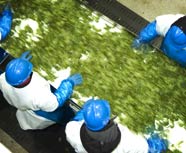
What have we learned from the food-related outbreaks and recalls of 2011? Here are five of my thoughts.
Our food is not getting any safer:
In fact, it might be getting less so. Improved legislation (such as the U.S. Food Safety Modernization Act, passed in late 2010) will have no positive impact unless there is also money and will to make improvements.
Food related outbreaks can be very large:
Food poisoning is no longer just a few people getting sick at the church picnic. Outbreaks can be huge. This was best illustrated by the enormous 2011 E.coli 0104 outbreak centered in Northern Germany, which made over 4,000 people seriously ill, and caused some 50 deaths. All this caused by some tiny sprouted fenugreek seeds that not many people eat.
The cause of an outbreak is quite difficult to trace and can take a long time:
As we saw in the above case, finding the culprit food is far from easy, particularly when political and economic factors interfere. It is not unusual for wrong foods to be initially suspected as occurred in Germany (The Safe Food Handbook also illustrates several such cases). Many food recalls also expand or have spinoffs, which is why I often warn readers to draw a large circle around a recalled product until the investigators have time to do their jobs.
Ready-to-eat foods and raw foods continue to be risky:
The Safe Food Handbook discusses the special risks in "raw, ready and remote" food. The food recalls of 2011 in the U.S. certainly confirm this. Look back on the recalls, and you'll see that a large proportion were foods that were ready to eat or "convenience" foods, many of them raw (such as bagged produce), and yes, we also had a lot of problems with imported products (I'll blog this separately).
Organic is no guarantee of safety:
Many of the contaminated foods of 2011 have unfortunately been organic - the organic celery seeds, organic grape tomatoes, organic bagged spinach, organic strawberries, organic milk and cheese, and more. True, organic foods are likely to have less pesticide, and some of them carry less hormones or antibiotic residues, but organic foods can be as likely, and perhaps even more likely, to carry bacteria and viruses.
To your good health,
TSF
Showing posts with label E.coli 0104. Show all posts
Tuesday, January 3, 2012
Sunday, January 1, 2012
SPROUTED SEEDS: MY NOMINATION FOR MOST DANGEROUS FOOD OF 2011
All things considered, I think I will nominate sprouted seeds as the most dangerous food of 2011. Considering that only a small percentage of people - mainly women - eat sprouted seeds at all, they cause a lot of misery.
Remember this past summer's huge Shiga-toxin-producing E. coli 0104 outbreak that was centered in northern Germany? After many false turns, it was eventually traced to a shipment of fenugreek seeds from Egypt that had been sprouted in Germany. The final toll was around 50 people dead, and over 4,100 people infected, most of them in Europe, but also in other countries such as Britain and the U.S.
In the U.S. we have regular outbreaks every year from sprouted seeds - primarily alfalfa, which is most popular, but also others. The usual problem is not E.coli bacteria, but Salmonella. This year Salmonella bacteria were found in alfalfa sprouts in mid-December, and in July, and in clover sprouts in January.
Another recall in sprouted seeds was announced by the FDA today (the company issued the recall yesterday, so it classifies at 2011). The company involved is the same one that had a Salmonella problem in December. This time it is a bigger recall, involving a wider range of sprouted seeds, and the contaminant is Listeria monocytogenes which is usually more dangerous - particularly for pregnant women. Ironically, many of the products or Green Valley Food Corp. are branded “Let’s Grow Healthy Together”. Oh..oh...
Here's the list of recalled products - mainly of concern to people who live in Texas.
- Let's Grow Healthy Together!” Alfalfa Sprouts 5 oz. plastic 2 piece containers with the UPC number 714722228818
- Let"s Grow Healthy Together!” Spicy Sprouts 5 oz. plastic 2 piece containers with the UPC number 714722229914
- Alfalfa Sprouts 4oz. plastic security sealed clamshell UPC number 815098001088
- Green Valley Food Corp.” Onion Sprouts” 4oz. plastic security sealed clamshell UPC number 815098002054
- Let's Grow Healthy Together!” Sunflower Greens 5 oz. plastic 2 piece containers with the UPC number 714722206069
- Let's Grow Healthy Together!” Clover Sprouts 5 oz. plastic 2 piece containers with the UPC number 714722225510
- Let's Grow Healthy Together!” Onion Sprouts 2 oz. plastic 2 piece containers with the UPC number 714722227712
- Let's Grow Healthy Together!” Zesty Sprouts 5 oz. plastic 2 piece containers with the UPC number 714722221116
- Let's Grow Healthy Together!” Organic Wheat Grass 6oz. plastic 2 piece containers with the UPC number 714722608122
- Let's Grow Healthy Together!” Mung Bean Sprouts 8oz. red polypropylene bag with the UPC number 815098001071
- Let's Grow Healthy Together!” Mung Bean Sprouts 16 oz. clear polypropylene bag with a green label, the UPC number 714722208162
- Green Valley Food Corp. Spicy Sprouts 4 oz. plastic security sealed clamshell containers with the UPC number 815098002023
- Green Valley Food Corp.” Snow Pea Shoots 3 oz. plastic security sealed clamshell containers with the UPC number 714722106062
- Green Valley Food Corp.” Organic Wheatgrass 4 oz. plastic security sealed clamshell containers with UPC number 714722608122
- Green Valley Food Corp.” Daikon Sprouts 3 oz. plastic security sealed clamshell containers with UPC number 714722206076
- Broccosprouts” Sandwich Blend 4 oz. plastic security sealed clamshell containers with UPC number 815098000289
- Broccosprouts” Salad Blend 4 oz. plastic security sealed clamshell containers with UPC number 815098000265
- Broccosprouts” Deli Blend 4 oz. plastic security sealed clamshell containers with the UPC number 815098000272
- Broccosprouts” Broccoli Sprouts 4 oz. plastic security sealed clamshell containers with UPC number 815098000258
To your good health,
TSF
Remember this past summer's huge Shiga-toxin-producing E. coli 0104 outbreak that was centered in northern Germany? After many false turns, it was eventually traced to a shipment of fenugreek seeds from Egypt that had been sprouted in Germany. The final toll was around 50 people dead, and over 4,100 people infected, most of them in Europe, but also in other countries such as Britain and the U.S.
In the U.S. we have regular outbreaks every year from sprouted seeds - primarily alfalfa, which is most popular, but also others. The usual problem is not E.coli bacteria, but Salmonella. This year Salmonella bacteria were found in alfalfa sprouts in mid-December, and in July, and in clover sprouts in January.
Another recall in sprouted seeds was announced by the FDA today (the company issued the recall yesterday, so it classifies at 2011). The company involved is the same one that had a Salmonella problem in December. This time it is a bigger recall, involving a wider range of sprouted seeds, and the contaminant is Listeria monocytogenes which is usually more dangerous - particularly for pregnant women. Ironically, many of the products or Green Valley Food Corp. are branded “Let’s Grow Healthy Together”. Oh..oh...
Here's the list of recalled products - mainly of concern to people who live in Texas.
- Let's Grow Healthy Together!” Alfalfa Sprouts 5 oz. plastic 2 piece containers with the UPC number 714722228818
- Let"s Grow Healthy Together!” Spicy Sprouts 5 oz. plastic 2 piece containers with the UPC number 714722229914
- Alfalfa Sprouts 4oz. plastic security sealed clamshell UPC number 815098001088
- Green Valley Food Corp.” Onion Sprouts” 4oz. plastic security sealed clamshell UPC number 815098002054
- Let's Grow Healthy Together!” Sunflower Greens 5 oz. plastic 2 piece containers with the UPC number 714722206069
- Let's Grow Healthy Together!” Clover Sprouts 5 oz. plastic 2 piece containers with the UPC number 714722225510
- Let's Grow Healthy Together!” Onion Sprouts 2 oz. plastic 2 piece containers with the UPC number 714722227712
- Let's Grow Healthy Together!” Zesty Sprouts 5 oz. plastic 2 piece containers with the UPC number 714722221116
- Let's Grow Healthy Together!” Organic Wheat Grass 6oz. plastic 2 piece containers with the UPC number 714722608122
- Let's Grow Healthy Together!” Mung Bean Sprouts 8oz. red polypropylene bag with the UPC number 815098001071
- Let's Grow Healthy Together!” Mung Bean Sprouts 16 oz. clear polypropylene bag with a green label, the UPC number 714722208162
- Green Valley Food Corp. Spicy Sprouts 4 oz. plastic security sealed clamshell containers with the UPC number 815098002023
- Green Valley Food Corp.” Snow Pea Shoots 3 oz. plastic security sealed clamshell containers with the UPC number 714722106062
- Green Valley Food Corp.” Organic Wheatgrass 4 oz. plastic security sealed clamshell containers with UPC number 714722608122
- Green Valley Food Corp.” Daikon Sprouts 3 oz. plastic security sealed clamshell containers with UPC number 714722206076
- Broccosprouts” Sandwich Blend 4 oz. plastic security sealed clamshell containers with UPC number 815098000289
- Broccosprouts” Salad Blend 4 oz. plastic security sealed clamshell containers with UPC number 815098000265
- Broccosprouts” Deli Blend 4 oz. plastic security sealed clamshell containers with the UPC number 815098000272
- Broccosprouts” Broccoli Sprouts 4 oz. plastic security sealed clamshell containers with UPC number 815098000258
To your good health,
TSF
Friday, July 29, 2011
NO ILLNESSES REPORTED FROM THE FOOD
I am constantly irritated by a standard phrase in food recall notices "no illnesses have been reported to date," or, words to that effect.
It sounds so comforting, doesn't it? The reader of the recall is likely to think it just a false alarm. Or, assume that the pathogenic E.coli, Salmonella, Listeria or other bacteria (or, other kind of contaminant) are harmless in this case.
But these words are often misleading. They ignore the time delay for symptoms to occur and the fact that reports take a long time to reach and work their way through the government bureaucracy (not just the U.S. but every country: Remember the recent E.coli 0104 outbreak in Germany?). Yes, a piece of sharp metal or certain toxins in your lunch or dinner can affect you almost right away. But not so with most bacteria and other microbes.
Let's take an extreme case - the bacteria Listeria monocytogenes, which has turned up in a whole range of ready-to-eat food items in the U.S. during the past ten days. In fact, it was a recent expansion of one of the recalls (the second expansion of three) which got me going on this topic. The products were made by Flying Food Group of Georgia for Starbucks, Core-mark and Race Trac, for distribution in Alabama, Georgia, Florida. This latest expansion now lists 40 ready-to-eat items such as sandwiches, parfaits, wraps, plates, and salads. The recall notice repeats twice - yes, twice, not just once - that no illnesses have been reported as yet.
Yes, the incubation period for Listeriosis (the disease caused by Listeria monocytogenes) can be as short as a few hours - in very rare instances. But usually it is around 12 days for any signs of illness to occur. And, it could take as long as 70 or even 90 days. Bureaucratic processing of illness reports (once recalls are out and doctors know what questions to ask the patient) and laboratory confirmation, often takes weeks. In fact, most instances of food poisoning are never linked up to a specific culprit food at all - ever. So, of course, there are no reports of illness as yet.
In other words, this is basically a meaningless statement unless the foods were eaten at least three months ago.
To your good health,
TSF
It sounds so comforting, doesn't it? The reader of the recall is likely to think it just a false alarm. Or, assume that the pathogenic E.coli, Salmonella, Listeria or other bacteria (or, other kind of contaminant) are harmless in this case.
But these words are often misleading. They ignore the time delay for symptoms to occur and the fact that reports take a long time to reach and work their way through the government bureaucracy (not just the U.S. but every country: Remember the recent E.coli 0104 outbreak in Germany?). Yes, a piece of sharp metal or certain toxins in your lunch or dinner can affect you almost right away. But not so with most bacteria and other microbes.
Let's take an extreme case - the bacteria Listeria monocytogenes, which has turned up in a whole range of ready-to-eat food items in the U.S. during the past ten days. In fact, it was a recent expansion of one of the recalls (the second expansion of three) which got me going on this topic. The products were made by Flying Food Group of Georgia for Starbucks, Core-mark and Race Trac, for distribution in Alabama, Georgia, Florida. This latest expansion now lists 40 ready-to-eat items such as sandwiches, parfaits, wraps, plates, and salads. The recall notice repeats twice - yes, twice, not just once - that no illnesses have been reported as yet.
Yes, the incubation period for Listeriosis (the disease caused by Listeria monocytogenes) can be as short as a few hours - in very rare instances. But usually it is around 12 days for any signs of illness to occur. And, it could take as long as 70 or even 90 days. Bureaucratic processing of illness reports (once recalls are out and doctors know what questions to ask the patient) and laboratory confirmation, often takes weeks. In fact, most instances of food poisoning are never linked up to a specific culprit food at all - ever. So, of course, there are no reports of illness as yet.
In other words, this is basically a meaningless statement unless the foods were eaten at least three months ago.
To your good health,
TSF
Monday, July 11, 2011
WHERE ARE THE REST OF THE DEADLY SPROUT SEEDS?
And it still isn't over - by far. The investigation of the deadly sprout-linked E.coli outbreak in Europe continues. Now there is a frantic search for tons of missing deadly sprout seeds. They have to be found before they cause more illnesses and deaths.
It turns out that there were some 16 tons of fenugreek seed in that single shipment from Egypt (how many seeds is that?). No one realized at first how widely they had been distributed. A search of the German importer's records has now shown that they went to dozens of companies in some 12 European nations. The European Food Safety Authority is having a bureaucratic fit. And with reason.
The seeds shipment dates back to December, 2009. Some of the seed has most likely already been used, but some of it is probably still in company supply chains all over Europe, who knows exactly where. It has been sold and re-sold, packaged under a variety of labels, and is very difficult to trace. To say the least.
And we need to find all this seed in case more of it is carrying this super-toxic E.coli 0104. That isn't necessarily the case, as no doubt this huge shipment came from several seed growers. Most of the seed might be quite safe. But the trouble is that we don't know.
At least 4,100 illnesses in Germany, 49 deaths, and some 16 related illnesses in France. Enough!
To your good health,
TSF
It turns out that there were some 16 tons of fenugreek seed in that single shipment from Egypt (how many seeds is that?). No one realized at first how widely they had been distributed. A search of the German importer's records has now shown that they went to dozens of companies in some 12 European nations. The European Food Safety Authority is having a bureaucratic fit. And with reason.
The seeds shipment dates back to December, 2009. Some of the seed has most likely already been used, but some of it is probably still in company supply chains all over Europe, who knows exactly where. It has been sold and re-sold, packaged under a variety of labels, and is very difficult to trace. To say the least.
And we need to find all this seed in case more of it is carrying this super-toxic E.coli 0104. That isn't necessarily the case, as no doubt this huge shipment came from several seed growers. Most of the seed might be quite safe. But the trouble is that we don't know.
At least 4,100 illnesses in Germany, 49 deaths, and some 16 related illnesses in France. Enough!
To your good health,
TSF
Thursday, June 30, 2011
ARE SPROUT SEEDS FROM EGYPT CAUSE OF OUTBREAKS?
It has just been reported that the German and French deadly E.coli outbreaks of this year may have both originated in sprout seeds imported from Egypt. European investigators have cautiously fingered contaminated fenugreek seeds. Apparently these were imported by a single German importer, which then distributed them to other companies, which then sold them to the two farms involved. At least one of these farms has reportedly had to close (the one near Hamburg, Germany) as a result.
The leaders in the investigation have included experts from the European Center for Disease Prevention and Control (ECDC) in Sweden and from the European Food Safety Authority (EFSA) in Italy. They have issued a joint statement saying: "The tracing back is progressing and has thus far shown that fenugreek seeds imported from Egypt either in 2009 and/or 2010 are implicated in both outbreaks." I am sure that the previously accused British seeds distributor (see earlier post) has issued a corporate sigh of relief.
But is it unusual for imported seeds to cause outbreaks? No, not at all. Contaminated seeds are the usual cause of contaminated sprouts (see previous 2 posts) and imported seeds have caused a number of sprout-linked outbreaks in several countries over the years. Alfalfa seeds imported from Australia have caused outbreaks in sprouts in the UK, Finland and Sweden. Sprout seeds from The Netherlands have been identified as the cause of outbreaks in the U.S. There are many more cases.
Let's see what more pops up in the next few days.
To your good health.
TSF
Monday, June 27, 2011
TWO WAYS THE FRENCH AND GERMAN E.COLI OUTBREAKS COULD BE LINKED
There is more and more conjecture that the huge German outbreak of food borne illness and the more recent French one could be linked. Both have been traced to sprouted seeds. Both involve an unusually toxic strain of the bacterium, E.coli. In the case of the German outbreak, centered around Hamburg and hopefully winding down, it is now reported that 47 people have died, almost all in Germany. In the case of the French one, no fatalities have been reported as yet, but seven people are still seriously ill and hospitalized, one of them in intensive care and one having treatment for kidney problems.
It is highly unlikely that these geographically separated outbreaks are linked through means such as contaminated irrigation or rinsing water, wildlife, improperly cleaned equipment, or improperly composted manure. But there are two ways that they could be linked (note: the link has not yet been proven). The possibility being focused on by the French authorities is that both the German and the French growers used contaminated seeds, probably from the same British seed company (see 3 posts for June 25). If so, that would follow a pattern that has caused nationwide sprout-linked outbreaks in the U.S. where several sprout growers with contamination problems had all used contaminated seeds from the same source.
However, there is also at least one more possibility: a worker at the French grower's could have had a case of the German E.coli 0104, and become a carrier, later contaminating the French sprouts. This can happen. People may no longer have symptoms of illness (or, may never have been really ill - "asymptomatic carriage") but continue to shed the E.coli bacteria for several weeks, or even months afterwards and pass it to others directly, or indirectly through surfaces or food - such as sprouts.
So if the two outbreaks are linked, which is it? We'll find out soon..
To your good health,
TSF
It is highly unlikely that these geographically separated outbreaks are linked through means such as contaminated irrigation or rinsing water, wildlife, improperly cleaned equipment, or improperly composted manure. But there are two ways that they could be linked (note: the link has not yet been proven). The possibility being focused on by the French authorities is that both the German and the French growers used contaminated seeds, probably from the same British seed company (see 3 posts for June 25). If so, that would follow a pattern that has caused nationwide sprout-linked outbreaks in the U.S. where several sprout growers with contamination problems had all used contaminated seeds from the same source.
However, there is also at least one more possibility: a worker at the French grower's could have had a case of the German E.coli 0104, and become a carrier, later contaminating the French sprouts. This can happen. People may no longer have symptoms of illness (or, may never have been really ill - "asymptomatic carriage") but continue to shed the E.coli bacteria for several weeks, or even months afterwards and pass it to others directly, or indirectly through surfaces or food - such as sprouts.
So if the two outbreaks are linked, which is it? We'll find out soon..
To your good health,
TSF
Saturday, June 25, 2011
COULD E.COLI CONTAMINATED SEEDS BE IN THE U.S.?
The latest hot topic in our global food supply is the recent outbreak of E.coli food poisoning in a suburb of Bordeaux, France. There is fear that it is linked to the recent huge outbreak of super-toxic E.coli in northern Germany that originated in bean sprouts. According to French investigators and officials, the cause here is also raw sprouts. And, the seeds used by the French sprout grower came from a venerable British seed company, Thompson & Morgan, which has been around for more than a hundred and fifty years (and has a wonderful blog - tmseeds.blogspot.com with all kinds of useful advice).
According to Wikepedia this company distributes its catalogues not just in the UK, and France, but also in Germany - and in the U.S. These catalogues are available through mail or can be requested directly from the company by telephone or via their websites. The New York Times also reported today that their seeds are sold in the U.S. I do buy vegetable seeds, but do not recall ever purchasing any of their so can't say for sure.
Again IF this company is the source of the French outbreak (and maybe even the German one - and no one knows yet), and IF an outbreak in sprouted seeds also occurs in the U.S. (which I hope doesn't), it wouldn't be the first one we have had from imported sprout seeds. The Journal of the American Medical Association (JAMA) describes two sprout contamination incidents that occurred in the U.S. in 1995, both eventually traced to seeds imported from the Netherlands. There have been others.
Let's hope it's just another case of "Round up the usual suspects" (as in that memorable line from Casablanca) and it turns out in the end to be something the gazpacho cook did, which doesn't have international repercussions.
To your good health!
TSF
DID BRITISH SPROUT SEEDS CAUSE E.COLI OUTBREAK IN FRANCE?
The UK industry and officials are denying it. But the French say it is true - or probably true. Seeds imported from Britain may have caused the latest (hopefully not E.coli 0104) sprout-linked outbreak in France. Is this going to be a modern-day Sprout Waterloo?
We will know in the next few days or weeks. In the meantime, France has halted the sale of fenugreek, mustard and arugula seeds from a British mail order seed and plant company, Thompson & Morgan. Apparently those sprouts on top of the delicious but deadly gazpacho at the Bordeaux charity dinner (where several of the recent victims ate) were grown with seeds from this company.
Company officials are saying it is more likely to have been something the French grower did or didn't do (since it is such a local outbreak - so far). But British authorities are being cautious anyway in protecting the eating public. Today (Saturday) they warned consumers against eating uncooked sprouts. The statement put out by Britain's Food Safety Agency advised that "sprouted seeds should only be eaten if they have been cooked thoroughly until steaming hot throughout." But it also noted that there haven't been any home-grown cases in the UK so far. This warning was just precautionary.
Even if it turns out to be something else (after all, a gazpacho has a lot of uncooked vegetables in it as well - including cucumbers, and this would not be the first time investigators jumped to a wrong conclusion), it is better to be safe than sorry.
Skip the sprouts in your salad, sandwich or soup. And if you are eating out, make a point of asking the restaurant to omit them.
To your good health,
TSF
HAVE DEADLY E.COLI 0104 NOW SPREAD TO SPROUTS IN FRANCE?
It was bound to happen. No sooner do you think an outbreak is over, when it isn't over. It looks like the super-toxic strain of E.coli bacteria that was traced to sprouts grown in Germany, may also have cropped up in sprouts grown in France.
But the French (who saw what slow action did in Germany) are acting much more quickly than the Germans did - and hopefully not fingering the wrong culprit. Not only have sprouted seeds been identified as the suspect food item, but investigators have found that all but one of the people who are ill attended a charity event at a children's play center in a suburb of Bordeaux at which they ate gazpacho garnished with sprouts. True, the German and French E.coli strains haven't been conclusively matched as yet (it takes a while), and other less-lethal E.coli have been known to turn up in sprouted seeds (as well as other foods) as well. In fact, there were at least 3,500 cases of E.coli reported last year in the EU, with some 93 of these in France (though not all may be linked to food). And there was a case of E.coli contaminated frozen hamburger meat in northern France just about a week ago (investigators say the two cases are not linked).
But what makes one suspect that this French outbreak and the German one might be linked is the high incidence of Hemolytic Uremic Syndrome (HUS) complications with kidney failure among adults who are ill. Only 8 illnesses have been reported in France so far, but of these, apparently 5 (or, 7 - depending on which news report you read) are hospitalized with life-threatening HUS. Even if we assume that the actual number of illnesses is much greater, this is clearly an unusually toxic E.coli - like the E.coli 0104:H4 that turned up in Northern Germany this spring. I hope not.
But if it is, what does this mean? It means that the bacteria was/is most likely in seeds themselves (although they are different kinds of sprouts). That is, the contamination did not come from water used by sprout growers for irrigation or washing, and the cause was not some bacteria-carrying worker or unsanitary conditions at the sprout grower's in Germany. I imagine that this grower is very relieved.
But it can also mean that there is more to come...We have not heard the end of this yet. Until the next post..
To your good health,
TSF
But the French (who saw what slow action did in Germany) are acting much more quickly than the Germans did - and hopefully not fingering the wrong culprit. Not only have sprouted seeds been identified as the suspect food item, but investigators have found that all but one of the people who are ill attended a charity event at a children's play center in a suburb of Bordeaux at which they ate gazpacho garnished with sprouts. True, the German and French E.coli strains haven't been conclusively matched as yet (it takes a while), and other less-lethal E.coli have been known to turn up in sprouted seeds (as well as other foods) as well. In fact, there were at least 3,500 cases of E.coli reported last year in the EU, with some 93 of these in France (though not all may be linked to food). And there was a case of E.coli contaminated frozen hamburger meat in northern France just about a week ago (investigators say the two cases are not linked).
But what makes one suspect that this French outbreak and the German one might be linked is the high incidence of Hemolytic Uremic Syndrome (HUS) complications with kidney failure among adults who are ill. Only 8 illnesses have been reported in France so far, but of these, apparently 5 (or, 7 - depending on which news report you read) are hospitalized with life-threatening HUS. Even if we assume that the actual number of illnesses is much greater, this is clearly an unusually toxic E.coli - like the E.coli 0104:H4 that turned up in Northern Germany this spring. I hope not.
But if it is, what does this mean? It means that the bacteria was/is most likely in seeds themselves (although they are different kinds of sprouts). That is, the contamination did not come from water used by sprout growers for irrigation or washing, and the cause was not some bacteria-carrying worker or unsanitary conditions at the sprout grower's in Germany. I imagine that this grower is very relieved.
But it can also mean that there is more to come...We have not heard the end of this yet. Until the next post..
To your good health,
TSF
Friday, June 24, 2011
CAN A CAMPAIGN GET EUROPEANS TO EAT FRUIT AND VEGETABLES AGAIN?
Among all the other problems it has caused (see previous post) this European outbreak of super-toxic E.coli 0104 bacteria decimated consumption of fresh vegetables - extending to fruit as well. You'll recall that cucumbers, and to a lesser extent, tomatoes and lettuce, were main suspects for a while, until sprouts (which are legumes) were found to be the culprit. People simply became afraid to even bite into an apple, let alone munch that unfairly maligned cucumber or tomato. A lot of this summer's crops was plowed under or fed to pigs, goats and other farm animals that like their veggies.
EU ministers of agriculture met earlier this month to discuss a way to compensate farmers and repair the image of fresh produce. One of the several proposals is to have a massive promotional campaign. Many such campaigns already exist, including the one by Freshfel Europe (the European Fresh Produce Association), which has been in existence since 2006 (see logo above).
Some countries also have their own. The “Apples from Germany” campaign had Germany's "apple queens" present baskets of apples to Chancellor Angela Merkel and other government ministers. Other aspects of the campaign were more fun - especially the touring “Apfel-o-Mat.” This was a highly popular photo booth, where anyone could have a funny photo taken with their favorite apple.
I also like the website launched by tomato and cucumber producers in France. It is targeted to children, with quizzes and games (see photo).City children who have never seen a tomato plant can learn all about tomato production. The campaign also has a newsletter and online videos for adults. Then there are all those other campaigns in other countries to promote kiwi fruit or blueberries from South America or bananas or some other produce.
So if another campaign is launched, will it get demand back to where it was before this outbreak? I have been involved in a few of such campaigns, and well, the results vary.
Anyway, I have noticed that after a food-linked outbreak, people avoid the culprit food for a while, and then gradually go right back to eating it. The chances are that this will happen even before the EU figures out who is going to pay for it and the campaign gets off the ground.
To your good health - and eating those veggies!
TSF
EU ministers of agriculture met earlier this month to discuss a way to compensate farmers and repair the image of fresh produce. One of the several proposals is to have a massive promotional campaign. Many such campaigns already exist, including the one by Freshfel Europe (the European Fresh Produce Association), which has been in existence since 2006 (see logo above).
Some countries also have their own. The “Apples from Germany” campaign had Germany's "apple queens" present baskets of apples to Chancellor Angela Merkel and other government ministers. Other aspects of the campaign were more fun - especially the touring “Apfel-o-Mat.” This was a highly popular photo booth, where anyone could have a funny photo taken with their favorite apple.
I also like the website launched by tomato and cucumber producers in France. It is targeted to children, with quizzes and games (see photo).City children who have never seen a tomato plant can learn all about tomato production. The campaign also has a newsletter and online videos for adults. Then there are all those other campaigns in other countries to promote kiwi fruit or blueberries from South America or bananas or some other produce.
So if another campaign is launched, will it get demand back to where it was before this outbreak? I have been involved in a few of such campaigns, and well, the results vary.
Anyway, I have noticed that after a food-linked outbreak, people avoid the culprit food for a while, and then gradually go right back to eating it. The chances are that this will happen even before the EU figures out who is going to pay for it and the campaign gets off the ground.
To your good health - and eating those veggies!
TSF
Thursday, June 23, 2011
SOME AFTER EFFECTS OF THE E.COLI OUTBREAK IN EUROPE
The E.coli 0104 outbreak is winding down, but it has left a lot of damage behind - political and economic as well as human.
There is still talk of Spain suing Germany over the "killer cucumber" claim which decimated the Spanish cucumber industry and affected other fresh vegetable exports.
A couple of days ago, Germany's Federal Parliamentary president visited Spain for the first time since the incident. But he said Germany is not ready to compensate Spain for the losses suffered, although he did say something about helping to restore international confidence is Spanish veggies (what - another Spanish cucumber munching photo op?).
And it wasn't just vegetable farmers and distributors and vendors in Spain who suffered massive losses, but in other countries as well - The Netherlands, UK and elsewhere. Half of the cucumber crop of the Netherlands is exported to Germany, and the losses have been reported at least at 9M euro a week, during the outbreak.
The UK Fresh Produce Consortium is up in arms, demanding full compensation for their "significant losses and a drop in consumption of salad products due to unfounded and premature claims made by the German authorities..." (quoting Nigel Jenney, Chief Executive of the FPC). I doubt they are going to get it either.
And then there are all the losses suffered by sprout growers and packers, not only in Germany - where people have been advised not to eat them raw- but also in other countries.
But what about all the human suffering - some of it long term? Let's not forget that apart from the misery of severe illness and fatalites, some people's health has been permanently damaged. A German expert, Dr. Helge Karch, at the University of Muster (quoted in today's New York Times, p.A5), who has been leading a team investigating the outbreak, expects that at least 100 of the victims of this outbreak will need kidney transplants or will have to undergo dialysis for the rest of their lives.
To your good health,
TSF
Tuesday, June 21, 2011
THE EUROPEAN E.COLI O104 OUTBREAK IS ALMOST OVER - WE HOPE
Finally, that awful E.coli -104:H4 outbreak in Europe is winding down. Reports of cases are still coming in, because of reporting delays, but there are apparently few new illnesses.
Here are the latest numbers according to the World Health Organization (WHO) for June 20, as reported June 21. The total of illness linked to this outbreak is 3697, with all but 5 victims either having lived in or travelled to Germany. Of these, 814 people have developed Hemolytic Uremic Syndrome (HUS) - a high 22% rate. The most heavily affected have been adult women (I would assume this is because women eat more sprouts). Some 40 people have died. Most of the cases have been in Germany. Sweden and Denmark are next. WHO reports only 6 in UK and 5 in the U.S. If you want to check on your country or see the full breakdown, go to the WHO website (www.who.org) and click on the link to the European outbreak. It should be updated regularly.
The culprit food has now (after some false starts) been identified as bean sprouts (but the window seems to have been left open to include other sprouts as well). People throughout Germany have been warned by the Robert Koch Institute (which is in charge of this mess) not to eat sprouts of any origin. The rare and very deadly bacterium that caused all this misery (as well as political fallout and economic problems) - and this is really a mouthful - has been identified as: "enteroaggregative verocytotoxin-producing E. coli (EAggEC VTEC) O104:H4."
Let's hope this is really the end. But now the experts are talking about the outbreak as a warning of similar things to come. Maybe this bacterium, maybe another. And yes, as we have seen, food poisoning can be very widespread, and these days, global in its reach. If a food like sprouts is the vehicle - which only a small percentage of people eat at all - what if it the hazardous item is something like lettuce or tomatoes, which almost everyone eats, often in raw form?
Frankly, I am not going to lose sleep over it. But let's eat as safely as we can. And I do hope that if we have another outbreak like this, anywhere in the world, the investigators and researchers will do a better job.
To your good health,
TSF
Wednesday, June 15, 2011
VEGETABLES ARE BEING UNFAIRLY BLAMED IN E.COLI 0104 OUTBREAK
The European outbreak caused by the new and super-toxic mutation of E.coli 0104 bacteria in food is finally winding down. As of now, the official number of illnesses stands at about 3,200 and the number of deaths at 37, including one child. But as I have been saying all along, these official numbers are always an underestimation. The German officials now acknowledge that it takes at least a week for statistics to travel from a hospital to the state authorities to the Robert Koch Institute, which is the federal authority for updating the numbers. (Are they really using snail mail in this situation?). Besides, many people still remain hospitalized with HUS, which has a high fatality rate.
And the blame-game is now winding down too. As you will recall, originally Spanish cucumbers were suspected, with other fresh vegetables such as lettuce and tomatoes also placed on the "avoid" list in many countries. Then bean sprouts turned out to be the culprit. But "blame the vegetables" game is far from over. I have yet to see any news report which does not call sprouts a "vegetable" or at least imply that they are.
Don't they know sprouts are a legume? Yes, they are a plant too, but legumes are in a different plant family. Sprouts are related to beans, lentils, peanuts and soy - not to our veggies.
So, stop blaming them! And let's get back to eating them.
To your good health,
TSF
Saturday, June 11, 2011
ARE SPROUTS THE DEADLIEST FOOD IN THE WORLD?
Sprouts (sprouted seeds) have now caused the two largest known outbreaks of E.coli food borne illness. You could say that they are the deadliest food in the world. And, unfortunately, a little goes a long way in terms of making you ill.
In the summer of 1996, in Sakai, Japan, an estimated 12,680 were sickened and at least 11 people died from eating radish sprouts. Many where school-age children.
In the early summer of 2011, in northern Germany, at least 3100 people have been sickened and so far 31 have died, from eating bean sprouts. Hundreds remain critically ill, as the outbreak winds down. Although sprouts were the second suspect, and then dismissed, the authorities have now concluded that the outbreak did after all originate in organic sprouts grown on a farm in the northern German village of Bienenbuettel.
Just a few days ago, the Dutch recalled exported beet sprouts from three countries, because E.coli was found, but not by the vicious Hamburg strain. It was another pathogenic E.coli bacterium.
There have also been numerous sprout-linked outbreaks in the United States and Canada over the years, many of them in alfalfa sprouts which are the most popular in the U.S. Sprouts are commonly contaminated with not just various E.coli, but also Salmonella and even Listeria (see earlier post). The government-recommended treatment of seeds (not obligatory), is not used by all growers, and even when used, does not always work. Organically grown sprouts appear to be no safer than conventionally grown ones.
At the beginning of this year, sprouts headed my list of 5 foods I would not eat in 2011 (see post of January 3). They are still there.
To your good health!
TSF
Wednesday, June 8, 2011
NO CAUSE FOR ALARM IN U.S. OR CANADA OVER EUROPEAN E.COLI
The second-largest outbreak due to E.coli bacteria in the world is still ongoing. The number of victims now stands at about 2,400 confirmed illnesses in 14 countries, over 600 of worst cases hospitalized with life-threatening hemolytic uremic syndrome (HUS), and at least 24 deaths. Multiply the number of illnesses by about 10 and you'll probably be closer to the real numbers (not everyone will become ill enough to see a doctor). The culprit food (and we are still assuming it was food) has not yet been identified.
In Canada, only one case (in Ontario) is recorded at present. In the U.S., at least 4 cases are believed to be part of this outbreak. The CDC says the one in Massachusetts has been confirmed, and two suspected cases are in hospital with HUS in Wisconsin and Michigan one each). The fourth case is not as bad. All five people ill in North America had recently been in Hamburg, Germany - the center of the outbreak, and eaten there.
However, at the moment there is no cause for alarm. The United States Centers for Disease Control (CDC), the Food and Drug Administration (FDA), and health officials in all the states are taking special action to quickly catch any cases and to prevent spread to others. (This bacterium can spread person-to-person as well as animal-to-human and through contaminated food or water). Suspect foods imported from affected European countries is undergoing special testing. Canada is also taking extra precautions. That is about all that government can do at present.
However, realistically, there will probably be more cases. If you have travelled to Europe recently, watch out for symptoms of diarrhea, stomach cramps, nausea and sometimes, vomiting. But remember that many other bacteria, viruses and parasites can cause the same symptoms (not to mention irritable bowel and all those other things!). When you see your doctor, don't forget to mention your trip.
To your good health!
TSF
In Canada, only one case (in Ontario) is recorded at present. In the U.S., at least 4 cases are believed to be part of this outbreak. The CDC says the one in Massachusetts has been confirmed, and two suspected cases are in hospital with HUS in Wisconsin and Michigan one each). The fourth case is not as bad. All five people ill in North America had recently been in Hamburg, Germany - the center of the outbreak, and eaten there.
However, at the moment there is no cause for alarm. The United States Centers for Disease Control (CDC), the Food and Drug Administration (FDA), and health officials in all the states are taking special action to quickly catch any cases and to prevent spread to others. (This bacterium can spread person-to-person as well as animal-to-human and through contaminated food or water). Suspect foods imported from affected European countries is undergoing special testing. Canada is also taking extra precautions. That is about all that government can do at present.
However, realistically, there will probably be more cases. If you have travelled to Europe recently, watch out for symptoms of diarrhea, stomach cramps, nausea and sometimes, vomiting. But remember that many other bacteria, viruses and parasites can cause the same symptoms (not to mention irritable bowel and all those other things!). When you see your doctor, don't forget to mention your trip.
To your good health!
TSF
Monday, June 6, 2011
ANOTHER U-TURN IN THE E.COLI OUTBREAK INVESTIGATION?
So the culprit vegetable for the huge toxic E.coli outbreak was declared to be (Spanish, imported) cucumbers. And then it wasn't cucumbers. Next it was (German-Saxony, organic) bean sprouts. And now doubt is being cast too on this being the criminal food. Talk of a mess! And talk of an embarrassing situation for German officials. And, a very frustrating situation for all the people living or visiting Northern Germany who are trying to not starve to death or ruin their health, but not knowing what to eat.
But I am a little sympathetic, because of the pressures and challenges involved in solving this mystery. If you have "been in the business" - as I have (among other things, having done bacteriology in public health laboratories), you tend to be more aware of the barriers and pitfalls. For one thing, particularly in the case of food, sufficient numbers of bacteria rarely turn up in every single sample. So you may get some negatives as well as positives. In this case, the news reports 23 out of 40 samples from the farm had turned out negative so far. There are still 17 to go. Let's see...
But there is also the chance - although less likely - that the bacteria entered at a later point. There are still other possibilities as well. I don't have the details on when the sprout samples were taken, but conceivably, it might be possible that the contamination was temporary, in that it only affected sprout crops at a certain period of time (around end of April to early May). This could have been a rainy period, with more runoff from fields where cattle were grazing. Or, perhaps wild animals (which can also carry such bacteria) were running around then, and are now gone. Sprouts do spoil rather quickly, so there may have been none of the original samples left on which to do tests.
Investigating the cause of a food outbreak is always a challenge, particularly with perishable produce or perishable legumes, unless you just happen to get lucky (for instance, finding the contaminated food sitting in the refrigerator of someone who has become ill). But, admittedly, this is one for the history books.
To your good health,
TSF
Sunday, June 5, 2011
E.COLI SPROUTS WERE GROWN IN GERMANY
It looks like imported food was not to blame after all. Bean sprouts are now suspected of causing this deadliest outbreak of food borne illness known. It has sickened over 2,000 people and caused at least 22 deaths. And, these sprouts originated right in northern Germany, where the outbreak centered.
The sprouts were in fact grown on a farm in lower Saxony. The ministry spokesman Gert Hahne told The Associated Press: "Bean sprouts have been identified as the product that likely caused the outbreak," Hahne added: "Many restaurants that suffered from an E.coli outbreak had those sprouts delivered."
Today, the Lower Saxony agriculture ministry sent out an alert, advising people not to eat the sprouts - on salads, in sandwiches, or in any form.
What we still don't know is exactly where and how the deadly E.coli entered the sprouts. The farm level is the obvious place to suspect, and most likely, the water used for irrigation, from improperly composted manure used as fertilizer or from grazing animals. Contaminants can also be in sprout seeds before they are even sent to the grower. Or, though less likely, contaminants can enter during processing.
Can you make sprouts safe? I'll deal with this in the next blog. In the meantime, if you have a copy, read about it in the book.
To your good health!
TSF
Saturday, June 4, 2011
RESTAURANT FOOD MAY BE INVOLVED IN E.COLI OUTBREAK
There is now some speculation that the huge outbreak of super-toxic E.coli in Europe may not have originated at the farm level after all. And, it may not be linked to imported produce - such as cucumbers. In fact, the outbreak could have been "home-grown" in Northern Germany itself, maybe originating at the Hamburg Port Festival. The beautiful festival took place at the beginning of May. That timing sounds just about right. It was attended by about 1.5 million people - both tourists and locals.
The possibility is being investigated. Certainly at least some of the victims attended the event. And reportedly several of them ate at a popular local restaurant called the Kartoffel-Keller - "The Potato Cellar" in English. It is a charming Hamburg restaurant with outdoor tables and vines - straight out of a tourist brochure. The photo is of one of their potato pies. The owner is clearly upset, to put it mildly.
I assume that we'll find out in the next few days whether all of the victims ate there (except for those who caught it second-hand from other people). They are no doubt being questioned right now. But it's possible. And it may not have been the restaurant's fault. If you look at my post of earlier today on E.coli 0157:H7 recalls of the past few months in the U.S., you will see that at least two of the contaminated meat recalls were of ground meat distributed to restaurants only. That is, the distributor sent the restaurant contaminated food. As I say in The Safe Food Handbook, restaurant food tends to be less safe.
Was the source even salad? Or was it potatoes? Or meat? Or, sprouts?
To your good health!
TSF
The possibility is being investigated. Certainly at least some of the victims attended the event. And reportedly several of them ate at a popular local restaurant called the Kartoffel-Keller - "The Potato Cellar" in English. It is a charming Hamburg restaurant with outdoor tables and vines - straight out of a tourist brochure. The photo is of one of their potato pies. The owner is clearly upset, to put it mildly.
I assume that we'll find out in the next few days whether all of the victims ate there (except for those who caught it second-hand from other people). They are no doubt being questioned right now. But it's possible. And it may not have been the restaurant's fault. If you look at my post of earlier today on E.coli 0157:H7 recalls of the past few months in the U.S., you will see that at least two of the contaminated meat recalls were of ground meat distributed to restaurants only. That is, the distributor sent the restaurant contaminated food. As I say in The Safe Food Handbook, restaurant food tends to be less safe.
Was the source even salad? Or was it potatoes? Or meat? Or, sprouts?
To your good health!
TSF
SALADS ARE ONE OF THE RISKIEST FOODS TO EAT
The Safe Food Handbook calls salads one of the riskiest types of food we can eat. In fact, it could well be that more food borne illnesses originate in salads each year than in any other type of food. Why?
The main reason is that we eat them raw. Meat may carry more bacteria, but we can do something about it: we can cook it. But we do nothing about our salads, except wash each item, peel where we can, and hope for the best. Some of the time it works. But sometimes it doesn't. The reason is that the microbes have got under the skin, right into the flesh - the parts we eat. And, salads are so easy to contaminate in the kitchen, from unclean surfaces or contact with other raw foods that carry bacteria. Salads in a restaurant are particularly risky.
As reported by CNN World, Dr Nicola Holden, from Scotland's James Hutton Institute, noted that food poisoning cases linked to vegetables appeared to be on the increase. "We have seen a rise in the number of outbreaks associated instead with fresh fruit and vegetables; in particular foods that are eaten raw or lightly cooked, like salad vegetables, fresh fruit and sprouted beans," she said.
What is happening in Europe right now with the current outbreak could underline this point. That is, if it really turns out to be one of the salad items that is responsible. It is not proven yet.
To your good health!
TSF
The main reason is that we eat them raw. Meat may carry more bacteria, but we can do something about it: we can cook it. But we do nothing about our salads, except wash each item, peel where we can, and hope for the best. Some of the time it works. But sometimes it doesn't. The reason is that the microbes have got under the skin, right into the flesh - the parts we eat. And, salads are so easy to contaminate in the kitchen, from unclean surfaces or contact with other raw foods that carry bacteria. Salads in a restaurant are particularly risky.
As reported by CNN World, Dr Nicola Holden, from Scotland's James Hutton Institute, noted that food poisoning cases linked to vegetables appeared to be on the increase. "We have seen a rise in the number of outbreaks associated instead with fresh fruit and vegetables; in particular foods that are eaten raw or lightly cooked, like salad vegetables, fresh fruit and sprouted beans," she said.
What is happening in Europe right now with the current outbreak could underline this point. That is, if it really turns out to be one of the salad items that is responsible. It is not proven yet.
To your good health!
TSF
E.COLI HAS US PASSING ON THE SALAD
There is still no solution to the mysterious E.coli bacteria outbreak in Europe. We don't know what the source was, but the main suspects are still cucumbers, lettuce and tomatoes.
People are getting nervous and forgoing their salad. First in Spain, now in other European countries as well, farmers are having to throw out their vegetable crops, or feed them to the goats and pigs. The market vendors are suffering too. The German government has advised people not to eat raw vegetables. That means no cucumber salad, no tomatoes on your sandwich, and no salads.
In Hamburg, the center of this deadly outbreak, the main market has few customers and sales have fallen. Even the U.S. military bases in Germany are pulling tomatoes, lettuce and cucumbers from the menus, salad bars and commissary shelves. And American Airlines has taken green salads off its menus on flights out of Europe.
But it's not just in Germany. People in other European countries are also being more cautious about fresh vegetables and especially the three main suspects. Even in Britain, farmers are having to discard tons of salad crops because of poor demand - not just of cucumbers, but also of lettuce, tomatoes - and even peppers. As of today, there have been at least 11 confirmed cases of this illness in the UK - four among visiting Germans, and the rest among Brits who recently visited Northern Germany, or, had close contact with someone from there.
Russia has gone so far as to ban import of all vegetables from Europe, which will also hit European farmers hard since it is a major market for their produce.
With all these bailouts and other problems, that's all the EU needed.
To your good health!
TSF
Subscribe to:
Posts (Atom)


