Tuesday, January 24, 2017

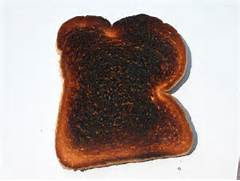
DON'T LET YOUR TOAST KILL YOU

Well, it seems that burnt toast has brought me back to blogging. It was bound to happen eventually, but I sort of wish it had been something more dramatic (another Fukashima?).

Today seems to be “acrylamide” day in the United States. A long list of on-line sites have suddenly discovered this potentially cancer-causing cooking chemical (MSN, CBS, sciencefocus.com, fox13news.com, lifescript.com, wdef.com, news.sky.com, and many, many more). Most have associated it with burnt toast and/or potatoes. It seems that Britain’s Food Standards Agency (FSA) started the ball rolling.

I hate to be doing a Trump and knock the media. But while it may not be fake news, it is very old news. European countries recognized acrylamide as a potential cause of cancer ages ago and have been educating the public well before Britain joined the chorus. And as for the United States…well. It has gone back and forth, but has been afraid to stick its bureaucratic neck out (the potato chip lobby at work?).

Now I am going to boast, which seems to be fashionable these days, at least in political circles. I did a thorough review of the issue about ten years ago. The Safe Food Handbook: How to Make Smart Choices about Risky Food, has a relatively short section on it – much shorter than originally went to the publisher.

And if you read it, you may find some other surprising foods that can contain acrylamide, not just burnt toast and certain kinds of potatoes.

But let me finish on a positive note about toast. One or two slices is not going to do it, so don't worry too much.

TSF (By the way, for those who always wondered, that stands for "The Safe Foodie."

Friday, December 26, 2014

BAD FOOD IN THE NEWS IN 2014

Bad food in the U.S. has been much the same in 2014 as it has been in preceding years. Looking back one month, I found a fairly typical array of Listeria and Salmonella bacteria- contaminated foods, as well as the usual number of undeclared allergens, foreign objects (such as bits of marker pen in canned soup), and a range of recalled uninspected products that contain who knows what.

As you will see from the below, prepared (ready-to-eat) foods and sprouts continue to be among the most risky items on the U.S. market. No amount of gourmet or health labelling guarantees safety.

Listeria monocytogenes bacteria, which pose a major threat to pregnant women, young children and people with a compromised immune system, are still very much a problem. Most recently this bacterium has cropped up in Snoqualmie Gourmet Ice Cream products (ice cream, gelato, custard and sorbet). It also turned up again in December in sprouts. Kkot Saem Sprouts, Inc. of Spanaway, Washington, had to recall its Soybean Sprouts and Mungbean Sprouts for this reason. In late November, soybean sprouts also had to be recalled by Henry’s Farm Inc. of Woodford, Virginia, because of Listeria.

Not surprisingly, this bacterium was also a suspect in prepared salads. Giant Eagle has issued a recall of Giant Eagle Apple Pistachio Salad and Apple Pistachio Salad with Chicken because of it. Global Garlic, Inc. of Miami, Florida, also had to recall a couple of its fresh curd products because it turned up. In addition, Acme Smoked Fish Corporation of Brooklyn, New York, had a nasty surprise when its imported (Product of Denmark) vacuum packs of Smoked Nova Salmon were found to be potentially contaminated with Listeria - another common location of the bacterium, particularly this time of the year.

Salmonella bacteria are also still present in our food, in spite of all the efforts to control them. During the past month for example, the company "Perfect Bar", had to issue a nationwide recall of large numbers of its Peanut Butter and Cranberry Crunch flavor nutrition bars due to potential contamination with Salmonella. And it has cropped up in cheeses too: Flat Creek Farm & Dairy of Swainsboro, Georgia, had to recall some of its Aztec Cheddar and Low Country Gouda. Another prepared food was also found to be contaminated: Overhill Farms, Inc. of Vernon, California had to recall its frozen Open Nature Chile Cheese Enchiladas due to potential Salmonella contamination.

So...not much has changed. Let's enjoy our great food, but be careful what we buy and eat, especially if we are in a high-risk category for getting sick.

To your good health,

TSF

Friday, December 19, 2014

BEWARE OF CARAMEL APPLES


We have a bad “holiday spoiler” food outbreak in the United States. It’s caramel apples. Several people have died, and many more are seriously ill. So far there is no actual recall, because we don’t know what brand of caramel apple is involved.

Here are the latest numbers from this food threat according to the CDC:

o Case Count: 28
o States: 10
o Deaths: 5
o Hospitalizations: 26

You’ll notice that there aren’t that many conclusively identified cases, but of these, a very high percentage ended up in hospital, and the death rate is also high.

The bacterium involved is Listeria once again. For those of you who have read the book (The Safe Food Handbook: How to Make Smart Choices about Risky Food), or who read this blog regularly, you will know that Listeria monocytogenes is often present in prepared foods – especially deli meats, sandwiches, salads, cheese and similar. This is the first case I can recall of it turning up in caramel apples.

Unfortunately, this tiny bacterium is a huge danger to pregnant women. Young children are also at more serious risk. In fact, in this case, nine of the serious illnesses were pregnancy-related (that is, they occurred in a pregnant woman or her newborn infant). Three of the very serious “invasive” cases were among otherwise healthy children, ages 5-15.

So what can we do to be safe? At the present time, the official CDC advice is for consumers to avoid all caramel apples – plain, with nuts, chocolate, sprinkles, or anything else. It could turn out to be one of the toppings, or the caramel itself. It seems that you can still keep eating caramels though. I am delighted that we don't need to give those up as well.

Investigators are hard at work trying to identify which ingredient in the caramel apples is contaminated, and the brand involved. I guess they won't have much time off this year.

To your good health,
TSF

Thursday, November 27, 2014

HOW IMPORTANT ARE DATES ON FOOD?

I have noticed that a lot of people are confused by freshness dates on food. A recent study by Harvard Law School’s Food Law and Policy Clinic agrees. It concluded that more than 90% of people in America have thrown out food too soon because they misunderstood what the dates actually meant.

Here are the real meanings of those freshness dates according to the U.S. Food and Drug Administration and the U.S. Department of Agriculture:
A “Sell-By” date tells the store how long to display the product for sale.
• A “Best if Used By (or Before)” date is recommended for best flavor or quality. It is not a purchase or safety date.
• A “Use-By” date is the last date recommended for the use of the product while at peak quality.

So if these dates refer to quality, where does food safety come in at all? I would not dismiss the dates completely. After all, freshness does have something to do with safety as well as with quality. Personally, I use the dates in two ways.

First, when I am shopping, especially for products such as milk, eggs, meat, fish and so on, I always make sure I get the product with the latest date. You would be surprised at what a variety of dates there are for items such as milk on one shelf at a single store.

Secondly, I use the date as an indication of how long to keep the food. Yes, quality matters to me, but so does safety. No, I don’t always throw the item out as soon as it has reached the “use-by” date or the “best-by” date. Sometimes I keep it for a few more days. But I never rely exclusively on such dates. I also use the old-fashioned “look-and-sniff” approach as a guide.

If the food smells “off” even if the date says it shouldn’t, you may not want to take risks, especially if you are older, or have a suppressed immune system or are pregnant.

To your good health,
TSF

Thursday, October 23, 2014

FOOD POISONING CAN BE GOOD NEWS - WHEN YOU THINK YOU'VE CAUGHT EBOLA

No one wants food poisoning. But at times, being told you have food poisoning may actually be good news. That is, if you were beginning to think you had Ebola.

Symptoms of food poisoning can appear similar to those of Ebola in its early stages.

Here are the most common symptoms of Ebola (source: CDC): fever, severe headache, muscle pain, weakness, diarrhea, vomiting, abdominal (stomach) pain, unexplained hemorrhage (bleeding or bruising).

Now, let’s compare the most common symptoms of food poisoning caused by Norovirus – also called “stomach flu” although it is not related to influenza: fever, headache, other body aches, fatigue, diarrhea, vomiting, stomach pain. Notice that "unexplained hemorrhage" is not among the symptoms of Norovirus, but it is not present during the early stages of Ebola either.

Let’s take another common type of food poisoning, the one causes by various Salmonella bacteria, some more deadly than others. Common symptoms include: fever, headache, weakness, diarrhea, vomiting, abdominal cramps.

My point – unless you are in West Africa, have recently returned from West Africa where you might have been in contact with Ebola patients, or, have recently had close - and I mean VERY close - contact with an Ebola patient in another part of the world (not just shared a plane, but shared body fluids), relax! Those symptoms you are having could just be food poisoning (or, malaria, or some other nasty disease). But not Ebola.

To your good health,

TSF

Saturday, October 4, 2014

CAN BABIES CATCH EBOLA FROM BREAST MILK?

Everyone is currently very nervous about Ebola. Yes, this horrible disease is mainly focused on West Africa. It's mainly in Liberia, Sierra Leone and Guinea. But we are realizing that with so much international travel, nothing is confined for very long.

Information about Ebola is changing from day to day, including the information coming from the experts. In the United States, the main “experts” are at the Centers for Disease Control and Prevention (CDC). I noticed today that they are now finally acknowledging breast milk as a route for Ebola transmission. They weren’t earlier. Maybe they have been reading the same research studies that I have been reading, especially some research done on earlier outbreaks of Ebola in Uganda.

What these studies show is that mothers who are infected with this virus can indeed pass on the virus to the infants they are breast feeding. But what the CDC does not mention as yet, is that research has apparently found that breast milk can carry the virus for weeks after the mother appears to have recovered.

Well, CDC, I think you had better make a correction on your website, especially in the paragraph which states:” Once someone recovers from Ebola, they can no longer spread the virus.” Not true….

To your good health,

TSF

Thursday, September 18, 2014

CAN YOU CATCH EBOLA FROM FOOD OR DRINK?


The 2014 outbreak of Ebola is the worst one ever. It has become an international health emergency. At present the main outbreak is confined to West Africa, to Guinea, Liberia, and Sierra Leone, with a small number of cases cropping up in other countries, including in the United States and a few European nations. But everyone is afraid that it will spread further.

The total number of suspected cases of Ebola as of today is 9937 (actual lab confirmed cases are less). Deaths number 4877. These statistics have been updated on October 24, 2014. Assume that this is a huge underestimation: people are hiding the ill and often those who have died, and statistics in many of these countries are very poor anyway, particularly when it comes to reporting what happens in remote rural areas. I know, I have worked there.

Ebola, which used to be known as “Ebola hemorrhagic fever”, is a deadly disease caused by infection with one of the Ebola virus strains (see the photo above). Ebola is extremely contagious. It is transmitted from someone who is ill to another person by means of the sick person’s blood (for instance, through needle-sharing and through hospital equipment if shared or not properly sterilized) or through body fluids. Body fluids refer to urine, feces, vomit, semen, and saliva. Sweat can also transmit it under certain conditions. So far, the virus is believed not to be airborne, unlike many viruses.

Can you also catch Ebola from food? You will find most websites and media articles saying that you can't. But this type of transmission has been reported during previous outbreaks (for instance, in Uganda) when people in the more remote areas of Africa prepared or ate Ebola virus-contaminated "bushmeat" (such as monkey, bat ). Alright, people in most countries don't include "monkey tartare" or "bat sushi" on their diet (I have read, by the way, that bat soup can be delicious, though have never tried it). But can you catch Ebola from other kinds of food or drink as well?

In theory it is possible. When it comes to food or drink, the issue of saliva is important. Therefore, if you are in an area where there is Ebola, and especially if you are with someone who may have Ebola, you may want to be careful about drinking out of the same container (bottle, glass or whatever), sharing eating utensils, eating out of the same dish, or eating foods prepared or served by someone with Ebola symptoms, or, whom you don't know well. But let me add that the Ebola virus is a very fragile one, and is not believed to last long outside the body, so this type of transmission may be very rare. I don't even know if it has ever occurred in this or previous outbreaks. I have written to the Director of the United States Centers for Disease Control and Prevention (CDC) to ask. So far, no reply.

This is a later addition. Another, less direct route related to food has also occurred to me. I would assume that if the person serving your food and touching your glass or eating utensils is contagious, and sweats on them (as they well might if they are ill and running a temperature), then you might also be at risk for Ebola if this sweat enters a cut in your hand or you transfer the sweat to a mucous membrane. But this is just a hypothesis. No doubt, over the next few months we'll find out more.


To your good health,
TSF