Showing posts with label food safety. Show all posts

Sunday, May 7, 2017

FOODS BILL MARLER AND I DON’T EAT


As I was googling another food safety issue the other day, I came across the list of 6 foods that Bill Marler won’t eat. In case you don’t know who Bill Marler is, he is the most prominent food poisoning lawyer in the United States. He has made many millions of dollars representing victims of food poisoning. Clearly he has learned something along the way about the most risky foods to eat.

So here is his list (from http://www.foodpoisonjournal.com/food-poisoning-information/six-foods-bill-marler-never-eats). And then I will give you mine.

1. Unpasteurized (“raw”) milk and packaged (unpasteurized) juices.
2. Raw sprouts.
3. Meat that isn’t well done.
4. Prewashed or precut fruits and vegetables.
5. Raw or undercooked eggs.
6. Raw oysters and other raw shellfish.

Now, to my list. I avoid everything on Marler’s list with a few additions and modifications. The below refer to his above points.

1. Yes, absolutely.
2. Yes, again.
3. Yes, but I also avoid underdone chicken (but I imagine, if asked, Marler would agree).
4. I definitely avoid all precut fruits and vegetables, but I do on occasions eat bagged prewashed salads or greens such as spinach (after first rewashing them), though I prefer to eat the fruits, vegetables and herbs that I grow myself).
5. Absolutely agree.
6. Absolutely agree.

In addition, I avoid these foods:

1. Salsa (unless I make it myself).
2. Raw milk cheeses
3. Raw fish, including in ceviche and even sushi.

TSF

Tuesday, January 24, 2017

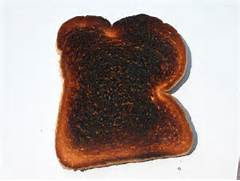
DON'T LET YOUR TOAST KILL YOU

Well, it seems that burnt toast has brought me back to blogging. It was bound to happen eventually, but I sort of wish it had been something more dramatic (another Fukashima?).

Today seems to be “acrylamide” day in the United States. A long list of on-line sites have suddenly discovered this potentially cancer-causing cooking chemical (MSN, CBS, sciencefocus.com, fox13news.com, lifescript.com, wdef.com, news.sky.com, and many, many more). Most have associated it with burnt toast and/or potatoes. It seems that Britain’s Food Standards Agency (FSA) started the ball rolling.

I hate to be doing a Trump and knock the media. But while it may not be fake news, it is very old news. European countries recognized acrylamide as a potential cause of cancer ages ago and have been educating the public well before Britain joined the chorus. And as for the United States…well. It has gone back and forth, but has been afraid to stick its bureaucratic neck out (the potato chip lobby at work?).

Now I am going to boast, which seems to be fashionable these days, at least in political circles. I did a thorough review of the issue about ten years ago. The Safe Food Handbook: How to Make Smart Choices about Risky Food, has a relatively short section on it – much shorter than originally went to the publisher.

And if you read it, you may find some other surprising foods that can contain acrylamide, not just burnt toast and certain kinds of potatoes.

But let me finish on a positive note about toast. One or two slices is not going to do it, so don't worry too much.

TSF (By the way, for those who always wondered, that stands for "The Safe Foodie."

Tuesday, December 31, 2013

PREPARING FOR 2014


I have just spent an unpleasant hour cleaning my small kitchen appliances. I don’t know why they don’t make toaster ovens so that you can easily take them apart to get those crumbs out. Crumb trays certainly don’t work. In the end, my most effective tools were a long wooden skewer, a pastry brush and several small screwdrivers.

All this is part of my preparing for a safe food 2014.

As I have written a book on food safety, I really thought I ought to blitz kitchen hygiene, even though I have to admit I would much rather be doing something else. I much prefer cooking - and do a lot of it. Or, for that matter, painting the kitchen rather than cleaning it. Listening to Beethoven while scrubbing away and wrestling with screwdrivers helped a bit.

Cleaning those small appliances thoroughly (yes, including turning them upside down and doing the underneath) is only part of this day’s agenda. Not all of it is strictly aimed towards a safe cooking environment, but some of it is.

Here is what else I still have to tackle (after finishing this post and getting a second cup of coffee to spur me on):

• Check all packaged, canned and frozen items for best-by dates; toss out any that have expired and make a note of those that are close to their expiry or best-by dates (a red magic market helps).
• Clean out the refrigerators thoroughly and wash with a bleach solution or vinegar to kill any mold spores (The Safe Food Handbook – the book, not this blog –recommends using one part bleach to one part water).
• Go through my huge number of herbs and spices to eliminate those that are too old (this is for flavor as much as safety).
• Check all cutting boards and either thoroughly scrub, sand-down, or, toss out if needed (as in the case of my favorite wood board). If you want other cleaning alternatives for your boards, take a look at what Martha Stewart suggests on http://www.marthastewart.com/272072/a-clean-kitchen-top-to-bottom.

And then, of course, I still have to cook that duck that is waiting for attention for tonight. Much more pleasant than all those other nasty – but necessary - chores. At least I will feel righteous after finishing them. That is, if I do.

To your good health in 2014!

TSF

Tuesday, August 6, 2013

WOULD YOU READ GM FOOD LABELS?

The U.S. debate on genetically modified (GM) foods is continuing. Much of the current discussion focuses on GM labeling of the food on our store shelves . Do consumers want it? Yes, the large majority do. In fact, U.S. consumers have been agitating for it for years. But if we do get it, would we actually read those labels?

Way back in 2008 (which now seems like the dark ages of GM foods), a poll by the New York Times found that 87% of consumers wanted such labels. Another poll in 2010 found that 93% of U.S. consumers were for it. Still another, in 2011, found 96% of consumers favored it. And yes, every poll since - to my knowledge - has come out with the same answer. Consumers want such foods labeled because the majority of us - especially women, older people - and Democrats - believe they are unsafe to eat. We want them, because then we could avoid such foods.

I agree. Consumers deserve the right to know what they are buying and eating. If they feel strongly about GM foods, they deserve the right to know which ones they should avoid, for themselves and for their children. That's what The Safe Food Handbook: How to Make Smart Choices about Risky Food is all about - showing you how you can choose safer food if you want to.

But there's theory, and then there's practice. Even if we had such labels on our food, would most of us read - and trust - them - even if they were in fine print, hidden somewhere in the fold of the package?

The truth is that a large percentage of people never read food labels - how large, I don't know. Estimates vary, and the statistics are not all that reliable. Studies have shown that people tend to overstate their label reading.

And, let's face it: it's not really a yes/no issue. Many consumers who do read the food labels, often just look at calorie content in relation to serving size and maybe sugar, fat or fiber, or, check the "Best By" date for freshness. They don't read the fine print, or read the health claims. How many don't? Maybe half.

Among those who do read labels, a large proportion do not understand them or find them confusing (much the same thing).

In addition, many consumers simply don't trust the labels, even if they do glance at them: they think that labels are a kind of advertising rather than a disclosure of facts.

So, if the U.S. decides to follow several other nations and really require GM labeling on food, who would consistently read them? Would you? And what would happen if we found out that the vast majority of food on our store shelves - including most of our favorites - exceeded the 0.9% (or, whatever) established GM material threshold?

To your good health,

TSF

Friday, May 11, 2012

CAN YOU GO MAD FROM EATING BEEF?

It's always disturbing when a food risk everyone has forgotten about suddenly comes back out of left field. That's what has happened recently with "mad cow disease" (Bovine Spongiform Encephalopathy - BSE for short) in the U.S. Even CNBC covered it during the business news.

Unlike some other countries, like the U.K, and to a much lesser extent, Canada, the U.S. has considered itself safe from this disease, and its human variant Creutzfeldt-Jacob Disease (CJD). Then suddenly, we have this dairy cow in California, that had been "shipped for rendering" - that is, to the slaughterhouse - which is diagnosed with it.

Are Americans now at risk from this fatal neurological disease of cattle, that can leave humans with an incurable brain disease (microscopic holes developing in the brain) if they eat contaminated beef? The answer at the present time is "no." There has only been one case of BSE in recent years (making only four in total in the U.S.) and all the cases of CJD among residents in the U.S. (about three) have been caused by eating contaminated beef overseas. We have pretty good controls set up to reduce incidence of BSE in cattle and to avoid BSE getting into our meat even if cases do occur.

But then there is the fact that USDA's ongoing BSE surveillance program only tests approximately 40,000 high-risk cattle annually with many times more getting through that are not tested for BSE. And while we know that this particular infected cow's meat did not enter the food supply, we don't know if other members of the same herd were also infected and these have made it into our hamburgers or steak (it doesn't get into the milk). More tests are being done.

In the meantime, don't worry. The incubation period for this disease can be as long as seven years, so relax and enjoy your dinner. (I can't resist the black humor). Read the section in The Safe Food Handbook if you want to know more about the issue.

To your good health,
TSF

Thursday, March 22, 2012

CAMPBELL'S SOUP WITHOUT BPA FROM THE CANS

Well, it has happened. Campbell's has finally caved in to pressure from the public and the Company's shareholders. Soon - although we don't know quite how soon - there will be no more of that toxic BPA (bisphenol A) in the cans used to package soups and other food products made by Campbell's.

Severals health-focused organizations deserve credit: the Breast Cancer Fund which released reports on finding BPA in several Campbell's products, including ones marketed to children such as Cambell's Disney Princes and Toy Story soups. The Healthy Child Healthy World Organization also did its part. It sent 20,000 of the 70,000 letters to Cambell's by supporters of the Cans not Cancer campaign. Other groups and organizations have also been involved over the years.

As Gretchen Lee Salter, policy manager at the Breast Cancer Fund said: "Campbell's decision to move away from BPA is a victory for consumers..."

And, about time. Who wants a chemical in the epoxy-lining of their food cans that has been linked by research to breast and prostate cancer, infertility, type-2 diabetes, early puberty in girls, attention deficit disorder - and more.

Eleven states in the U.S. have now restricted BPA in infant food containers. There is also legislation before Congress which could ban the use of BPA in all food - and also beverage containers. Get a move on Campbell's and implement the change!

To your good health,

TSF

Tuesday, March 6, 2012

DANGEROUS SALT IN POLAND

The safety of our salt is one of the things we tend not to question. But, that salt you so liberally sprinkle on everything from eggs to meat to potatoes to your vegetables, could be undermining your health in more ways than one. Especially if you live in Poland.

The media has been reporting that a six-month long investigation in Poland has uncovered a horrible scandal: salt that was only meant to be used for de-icing of roads or for use in the chemical industry, is now everywhere in the food supply. Apparently it has been secretly repackaged and sold as edible salt to food processors, bakeries and food wholesalers.

And believe me, you don't want to eat this kind of salt. It originated as a waste product from one of the largest fertilizer producers in Poland - Anwil S.A. The salt contains dangerous carcinogenic chemicals, including ones that could become carcinogenic dioxins in the human body.

People in Poland are afraid that this carcinogenic salt is likely to be present in everything they eat. After all, it wasn't just a bag of the stuff that was sold. Reports estimate that three Polish businesses have been buying some 1000 metric tons of "road" salt a month over a period of 10 years and selling it as edible salt.

Could this happen elsewhere in the world? Of course it could. Times are tough and there are plenty of people anxious to make "a fast buck" no matter what the cost to others.

To your good health,

TSF

Saturday, January 28, 2012

BOILED EGG AND SPINOFF RECALLS

I have to admit that I used to be one of those people who believed that a boiled egg would spoil less quickly than a raw egg. Not true. It will actually spoil faster. The reason: once an egg is boiled, the protective coating on the egg is removed and bacteria can enter more quickly.

Then, if the boiled egg is also peeled, it can become contaminated even faster, including during the peeling process itself. In that case, the most likely bacteria to get in is not the usual egg-contaminant Salmonella, but Listeria monocytogenes, the one that is most common in ready-to-eat foods. And, the one that is so dangerous for pregnant women and anyone with a weak immune system.

So the ongoing boiled egg recall in the U.S. in the state of Michigan provides some useful lessons. Michael Foods Egg Products Co. - a large distributor of hard-boiled eggs has found Listeria monocytogenes in some of its products. This recall has a number of spinoffs, because the suspect eggs distributed by this company have been used in making a variety of deli products by its clients.

For instance, in Grand Rapids, Michigan, Spartan Stores has had to recall eight deli products containing these hard-cooked eggs including egg spread, sandwich with egg spread, small and large chef container salads, seven layer and seven layer no-meat container chef salads, and small and large no-meat container chef salads. Sell-by dates are Jan. 20 through Feb. 1. In West Michigan, the recalled products were sold at D&W and Family Fare.

Another Michigan deli - 18th Street Deli Inc., is recalling some 118 pounds of julienne salad products with turkey, ham and hard-boiled eggs. According to local news reports, some salads containing the eggs were also sent to Michigan schools. And I bet there are more recalls to come.

By the way, notice that these "ready-to-eat" egg products have also been used to make pre-packaged sandwiches, which I have been writing about for the last two days...

And of course, this gets back to my mantra about how dangerous ready-to-eat "convenience" foods are...And that doesn't just apply to Michigan, or just to the U.S., but everywhere in the world. This Listeria monocytogenes bacterium is running amok.

Watch out!

To your good health,

TSF

Sunday, January 15, 2012

BITS OF CONVEYER BELT IN SCHOOL LUNCH BEEF


Institutional food is the riskiest kind of food to eat. That unfortunately, also applies to school lunches served under the U.S. National Food Program, although they are supposed to be safer than is nursing home food. On a typical school day, close to 12 million children in the U.S. eat lunch (and sometimes breakfast) under this program. Yes, they may be getting nutritionally better food than otherwise, but what else are they getting?

Over the years, there have been some pretty bad outbreaks. Usually, any contamination involves viruses or bacteria - and in one large U.S. case that I know of, probably mold toxins (There's a write-up of this case in The Safe Food Handbook).

And, occasionally school lunches also contain those nasty "foreign materials" like bits of metal, glass, plastic and so on (also see next post).

Yesterday, the U.S. Department of Agriculture (USDA) announced a recall of seasoned diced beef products by RSW Distributors, LLC, of Forest City, N.C. Apparently a conveyor belt broke during processing and bits of the belt ended up in the food. USDA/FSIS said they had to set aside the contaminated food (an inspector must have been on the premises, as required). But then, somehow or other, the food was shipped out after all to institutions for further distribution to schools in South Carolina, Tennessee and Washington as part of the USDA's National School Lunch Program.

Well, better bits of rubber than bits of glass or metal, but still..This is really sloppy. Nor is this the first time that this type of mistake with shipping has happened. I hope they caught all the food before it reached the school children. No injuries have been reported. Maybe the kids ate it and just thought the beef was tougher than usual!

To your good health,
TSF

Tuesday, January 3, 2012

FIVE FOOD SAFETY LESSONS FROM 2011

What have we learned from the food-related outbreaks and recalls of 2011? Here are five of my thoughts.

Our food is not getting any safer:
In fact, it might be getting less so. Improved legislation (such as the U.S. Food Safety Modernization Act, passed in late 2010) will have no positive impact unless there is also money and will to make improvements.

Food related outbreaks can be very large:
Food poisoning is no longer just a few people getting sick at the church picnic. Outbreaks can be huge. This was best illustrated by the enormous 2011 E.coli 0104 outbreak centered in Northern Germany, which made over 4,000 people seriously ill, and caused some 50 deaths. All this caused by some tiny sprouted fenugreek seeds that not many people eat.

The cause of an outbreak is quite difficult to trace and can take a long time:
As we saw in the above case, finding the culprit food is far from easy, particularly when political and economic factors interfere. It is not unusual for wrong foods to be initially suspected as occurred in Germany (The Safe Food Handbook also illustrates several such cases). Many food recalls also expand or have spinoffs, which is why I often warn readers to draw a large circle around a recalled product until the investigators have time to do their jobs.

Ready-to-eat foods and raw foods continue to be risky:
The Safe Food Handbook discusses the special risks in "raw, ready and remote" food. The food recalls of 2011 in the U.S. certainly confirm this. Look back on the recalls, and you'll see that a large proportion were foods that were ready to eat or "convenience" foods, many of them raw (such as bagged produce), and yes, we also had a lot of problems with imported products (I'll blog this separately).

Organic is no guarantee of safety:
Many of the contaminated foods of 2011 have unfortunately been organic - the organic celery seeds, organic grape tomatoes, organic bagged spinach, organic strawberries, organic milk and cheese, and more. True, organic foods are likely to have less pesticide, and some of them carry less hormones or antibiotic residues, but organic foods can be as likely, and perhaps even more likely, to carry bacteria and viruses.

To your good health,
TSF

Wednesday, October 5, 2011

HOW TO MAKE YOUR CANTALOUPE SAFER


This ongoing outbreak of Listeria monocytogenes bacteria in whole cantaloupes has Americans scared. Food poisoning is one thing, but once people start dying it's another. There have now been at least 100 confirmed illnesses and 18 deaths. Nor is this the end, because of the long lead time before symptoms develop. The detailed personal stories on line in some of the lawyers' blogs are enough to make one give up eating cantaloupes for life.

But many of us really like cantaloupes. We don't want to stop eating them. So how can we eat them more safely? Cooking cantaloupes is out, so we have to think of other ways to avoid - not kill - most of any existing bacteria. Here are some ideas.

• Eat whole cantaloupe rather than cut-up ready-to-eat packaged ones. Yes, I know this outbreak started in whole cantaloupes, but usually bacteria, and especially Listeria monocytogenes, are more likely to turn up in the sliced-up "convenience" type, coming from workers who are carriers or contaminated equipment or even packaging that is used.
• Always wash thoroughly your whole cantaloupe before cutting it, using cold running water. True, some have already been washed and look perfectly clean, but may not be, and others are clearly soiled. Use a soft brush if the cantaloupe has a rough skin, to get into all the crevices. Never use hot and then cold water, because this can draw any bacteria on the skin inside the cantaloupe.
• Wash your hands first and then peel the whole cantaloupe with a clean knife and then rinse it again under running cold water. This is a little tricky to do as it's pretty slippery. In that case, you may want to cut the cantaloupe in half, running it briefly under cold water where cut and then peel it. Rinse the now peeled item, the knife and your hads quickly again, before slicing up the cantaloupe.
• If a cantaloupe has a soft bruised area, cut off this part, with at least an inch margin (depending how bad the bruising is). Use an even wider margin if part of it is moldy.
• For the time being, avoid the Jensen Farm pesticide-free Rocky Ford ones if you happen to come across any, although not every cantaloupe will be heavily contaminated. As far as we know right now, the problem is limited to this farm's produce, and to any processors that used them for salads or convenience products. The cause of the contamination has not yet been identified, and if it is the irrigation water, contaminated soil or processing water, it will take a while to resolve. If that cantaloupe in your frig has no label, discard it anyway, just to be safe.

To your good health,
TSF

Wednesday, September 7, 2011

TEACHING YOUNG CHILDREN ABOUT FOOD SAFETY

I find that interviewers for TV or radio shows never ask me what I think they will or should ask me. Often interviewers usually pose very general questions - difficult to answer in a 10 seconds or less on air.

As I see it, the topic of food safety can be applied to so many different situations, and I am perfectly willing to do so. Last Saturday I was being interviewed for the "Mr. Dad" radio show. This is a good show, which provides a lot of useful information, as do the related column and books. What I expected to be asked were questions that tied food safety to positive parenting, and maybe even to male parenting.

How and what should parents teach their children about safety issues in their food? Of course, it should be age-specific. But you can start quite early. The teaching should involve both teaching by example, and by instruction.

Situations such as shopping for food or preparing a meal provide wonderful opportunities to explain why you do one thing or another if your child is with you. Why are you buying this apple instead of that one? What are you reading on the package? Why are you washing the fruit or vegetables before eating? Why are you cooking the meat?

Before age 5, the simple concept of "clean food is good food" is enough. In thinking about the issue, and given the nature of the typical North American household, which usually includes pets, I would try to instill the following ideas before age 5 - even before age 3 in some cases:

• If food is going to make you grow big and strong it has to be "clean."
• Food becomes cleaner if you wash it or cook it.
• If you touch food with your hands, they have to be clean too.
• If you drop your food, you can't just go ahead and eat it: it has to either be washed or thrown out.
• Your pet's food is not as clean as yours, so if you touch its food (especially dog treats) you have to wash your hands before you eat. Or, if your pet takes a bite of your sandwich or your ice cream, you can't eat it any more.

Pretty simple stuff, right? Yes, but it can provide a solid foundation for more sophisticated learning in later years.

To your good health,
TSF

Tuesday, August 30, 2011

AVOID BIRD FLU THROUGH SAFE FOOD HANDLING


In the previous post I mentioned the renewed concern about Avian Flu -
"bird flu" - particularly in certain parts of the world. This is one of those frightening microbes that has crossed the species barrier. It is not only deadly for chickens, ducks and other domestic and wild birds. We humans can get it too - and so can our cats, by the way.

A large number of confirmed human cases are believed to have acquired their infection during the slaughtering, defeathering, cleaning or preparation of diseased or dead birds prior to cooking. So if you happen to live in one of those countries currently experiencing outbreaks of H5N1 in poultry, how do you avoid getting ill?

Here are a few facts which you may want to keep in mind:

• Only healthy-looking birds should be used for consumption. However, some poultry that carry the virus do not appear to be sick. You cannot assume that vaccinated poultry is safe from it.
• The H5N1 avian influenza virus can spread to all parts of an infected bird, including the blood, meat and bones.
• Keep raw meat away from any ready-to-eat foods or items that are eaten raw.
• Always avoid contaminating any surface with raw poultry or its juices: this virus can survive for weeks on a kitchen cutting board or counter.
• Wash your hands and any utensils used on raw poultry very well.
• Remember - refrigeration will not inactivate this virus.
• Cooking poultry at normal temperatures (70 °C) will inactivate H5N1.

To your good health,
TSF

Monday, August 29, 2011

IS BIRD FLU A FOOD SAFETY CONCERN?


The United Nations Food and Agriculture Organization (FAO), for which I have worked, has just put out a new alert on "bird flu" - correct name "Avian Influenza" . Remember how scared we were of it years ago? And then, we forgot all about it. Now apparently it is on the rise again, especially in Asia.

When I was writing The Safe Food Handbook, I debated whether to include bird flu in the discussion of risks in meat and poultry. In the end I did - because I became convinced that there could indeed be a resurgence of it and the virus could mutate. But the final section on it is very abbreviated because it is not currently considered a food risk in North America.

True, the most common way you can catch this potentially deadly kind of flu (which has about a 60% mortality rate) is not through eating undercooked chicken or other poultry or eggs. Rather, it is through handling diseased birds (including wild ones) or touching their saliva or droppings. And, even through breathing in contaminated dust. Many of the children who have caught it did so when cleaning out poultry cages - a chore I well remember having to do as a child.

But can you ever get it from food? I became very involved in researching this issue, spending weeks on it, reviewing all the global case studies and research I could find. Yes, there have been a limited number of cases recorded where people did catch it from undercooked poultry or dishes made with poultry blood. However, many more have caught it from preparing the raw poultry.

So, how worried should you be if you don't work on a poultry farm - just eat poultry? In general, I would say "not much" especially if you don't live in countries where it is presently most prevalent - Egypt, Bangladesh, China, India, Indonesia, Cambodia or Vietnam. But with bird migration and the globalization of our food supply, this could change. Occasional cases have indeed occurred elsewhere.

To my knowledge, there has been just one small - and quickly caught - outbreak of this H5N1 virus in the US - on an Idaho pheasant farm (in September 2008).

To your good health,
TSF

Tuesday, August 9, 2011

E.COLI 0157:H7 CAUSES GROUND BEEF RECALL

The U.S. Department of Agriculture (USDA) has been busy tracking down contaminants in food. And its efforts are paying off. Mind you, a little late, but at least eventually.

For the last three months or so, it was chasing the cause of the Salmonella illnesses that were occurring nationwide in the U.S. After much effort, the USDA finally fingered the ground turkey produced by one of America's giant meat firms as the culprit (see previous posts).

Now, working together with the Michigan Departments of Community Health (MDCH) and Agriculture and Rural Development (MDARD), it has tracked down the cause of the E. coli O157:H7 illnesses that have been occurring in Michigan since July.

This time another ground meat product is involved - ground beef (ground products are always more risky). It was produced by McNees Meats and Wholesale LLC., a North Branch, Michigan. The company is recalling only about 360 pounds of ground beef product at this time (but this could expand). As far as is known at present, this product was only distributed in Michigan (If I find out differently, I'll add to this). Since these were large 10lb bags, presumably they were sold to food service establishments.

E.coli 0157:H7 can cause bloody diarrhea, dehydration, and in the most severe cases, kidney failure. Seniors and persons with weak immune systems, as well as children, are the most at risk.

To your good health,

TSF

Thursday, August 4, 2011

WHERE IS THE CONTAMINATED TURKEY BEING SOLD?

The USDA promised information on who was actually selling the potentially Salmonella-contaminated ground turkey (see previous posts) in the U.S. This information hasn't come out yet. My blog's search information shows that a lot of people want answers. Trader Joe's customers seem to be particularly concerned.

However, now that the word has gone out, you can basically assume that the recalled items have been withdrawn from store shelves. The larger retailers have systems in place which assure that this happens. As for the smaller stores, I don't know if they received any product from Cargill (the recalling company) but I doubt it. This huge food producer would tend to have large customers.

That basically leaves you checking your refrigerator - or, going through your garbage to find the packaging if you bought some pre-packaged ground turkey recently and can't remember which one it was. The company has actually posted a good list, with photos of each product, on http://stage1.order.cargill.com/na3047772.pdf. You may want to check this to refresh your memory.

What I can do is to name the states which have most likely sold the potentially contaminated ground turkey since theses are where the illnesses have occurred. Take a look at the map. By the way, the one death so far, was in California. A lot of people are still hospitalized and seriously ill.

To your good health,
TSF

UPDATE: If you live in California which gives you the specifics on where the turkey was sold there, and telephone numbers to call at the stores. In other states, search the websites of your state health agencies.

Wednesday, July 27, 2011

A BAD FEW WEEKS FOR READY-TO-EAT FOODS

At least in the U.S., and no doubt elsewhere as well, there are regular recalls for ready-to-eat, or "convenience" food products. The reason is usually that testing has turned up dangerous bacteria in the food. Since they are "ready" for eating, and are therefore rarely cooked, such bacteria are also more likely to cause illnesses.

For instance, between July 5 and July 26 - a period of just three weeks, the U.S. Department of Agriculture (USDA) issued 11 recalls for meat-containing ready-to-eat foods. Two of the product recalls were simply for mislabeling or undeclared allergens (which I do not blog) However, nine recalls are taking place because testing by USDA turned up pathogenic bacteria in the food. Of these, 7 (counting two expanded recalls) were due to Listeria monocytogenes bacteria being found . The other two were for Salmonella bacteria.

You can see why I keep saying that pregnant women and people with weakened immune systems should go easy on eating ready-to-eat foods.

To your good health,
TSF

EXPANDING FOOD RECALLS


If you follow food recalls, you will realize that they often start small and get bigger. What I mean is that originally we are told that a few specific products and lots of a food item may be contaminated. Then, some days or even weeks later, we are told that there are actually a few more, and then even more. It happens over and over again.

And it happened this past week. The recalls involved ready-to-eat meat products that were contaminated with Listeria monocytogenes bacteria. One recalling food producer was Flying Food Group, of Georgia, which produced these products for Starbucks and the other was the well-known Pilgrim’s Pride Corporation of Texas. Both had to expand their recalls six days after they were initially made, to include additional items produced at the same plant, which had not been named in the original recall.

What happens if bacteria are found, is that other foods produced at the same plant or using the same suspect ingredients, or, the same equipment, are tested as well. And that is when additional contaminated products often start turning up and more have to be recalled.

So what does this have to do with the health-conscious consumer? Actually, quite a lot. Say, for instance, that you are a pregnant woman who needs to involve being exposed to Listeria bacteria at any cost. In that case, as soon as a recall is announced for one of a company's products, avoid any similar ones for at least a week or two, in case they turn out to be risky as well - just in case. If you read my alerts, you'll see that I often advise this. Such precautions may sound a bit extreme. But they really aren't. Not if the life of your unborn child could be involved.

To your good health,
TSF

UPDATE: Flying Foods Group issued a third expansion of th recall on July 28. Here's a summary of how it has gone so far: July 19th - 2 RTE foods recalled (made for Starbucks only). July 26 - recall expanded to cover 10 items. July 28 - recall expanded to cover 40 items (with now 3 distributors). Ugh!

Sunday, July 3, 2011

SAFETY TIPS FOR PICNICS AND BARBECUES


Summer is the time for outdoor eating and cooking. One of my regular readers asked me about how to avoid getting food poisoning at such events. She is right to be concerned. People all over the world get ill every summer from that wonderful picnic or barbecue. So here are some things you may want to keep in mind to avoid such problems.

• Try to find a shady outdoor eating spot, or bring along your own umbrella so that food is not sitting in the sun, including when served.
• Keep food cold until you are ready to eat it (40 degrees F) in a good cooler, which is best left in the open in the shade - not in the hot trunk of your car. Make sure the ice or ice packs are on top of the food.
• If you are bringing already cooked and hot foods with you, or cooking outdoors, make sure that you don't let the food sit at a warm temperature for more than an hour. Keep it hot, and eat it quickly (bacteria multiply fastest at 40-140 degrees F).
• Make sure you keep uncooked meats away from other items that you plan to eat raw (such as salads or breads) and that you use different utensils for each, so that there is no cross-contamination.
• Wash your hands before handling food, and take special precautions when handling raw or partly cooked meat (use tongs). I usually take along an extra bottle of water on picnics, just for hand washing.
• When barbecuing make sure that everything is well-cooked to 165 degrees F (also see June 18 post - "Are Hot Dogs Safe to Eat?", no matter how hungry you are. (A meat thermometer is a small and light item to throw into your picnic basket).
• Throw out leftovers if they have been sitting outside for more than an hour or your ice has melted.


To your good health,
TSF

Sunday, June 19, 2011

HOW DANGEROUS IS RADIATION IN GREEN TEA?

We tend to think of green tea as a healthy drink. Initially, I found the taste a little difficult to become used to, but am now drinking a couple of cups a day. I have friends who drink ten cups or more. All those wonderful antioxidants that our bodies need! Not only has green tea been drunk for thousands of years in countries such as China, India, Thailand and Japan, but it has been used as a medicine to treat anything and everything, ranging from flatulence to heart conditions. Besides, it is supposed to be good for your complexion.

Now we are reading reports that some of the tea grown in Japan may be accumulating high levels of radionuclides from the crippled Fukushima Dachii nuclear power plant (see yesterday's post). The tea growers from Shizuoka Prefecture, where much of Japan's tea is grown, say this kind of concern is ridiculous. So do some members of the opposition party.

After all, dry tea is a concentrated product. When tea leaves are fresh, and therefore heavier, testing would show lower levels of unhealthy radionuclides such as cesium-137 and 134. And besides, when you add water to dry tea leaves, it becomes even more diluted, thus lowering levels of radionuclides to acceptable levels.

Yes, all this is probably true, but still, I can't say I like the idea of drinking my "healthy" green tea with a touch of nuclear contaminants.

And you had better not chew on the green tea leaves, just in case! Some people do. Not even in your chewing gum, or those delicious Trader Joe's green tea candies.

To your good health,

TSF